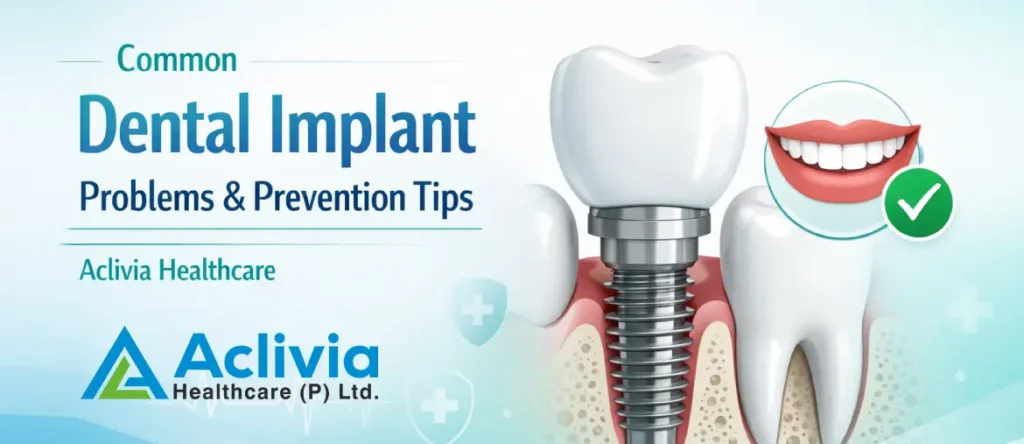
Dental implants are one of the most popular methods to replace lost teeth. They are natural, comfortable, and feel confident when smiling. Despite being strong and long-lasting, dental implants may be unfavorable. The positive thing is that the majority of implant problems are avoided when they are carefully attended to and on time.
In this blog, we discuss some of the common dental implant problems and some simple tips to avoid them.
1. Infection Around the Implant
One of the issues that is most frequently left is the infection surrounding the implant area. Symptoms of infection can involve redness, swelling, pain, or bleeding in and around the implant.
Prevention Tips:
- Brush your teeth twice a day
- Wipe the area surrounding the implant
- Apply mouthwash on the recommendation of your dentist
- Go to your dentist regularly
2. Implant Loosening
When it becomes loose, then it can be an indication that the implant is not attaching well to the jawbone or as a result of overpressuring it.
Prevention Tips:
- Use extreme caution with hard foods
- It is bad to use your teeth to open your bottles or packages
- What to do after the implant surgery
- In case of any movement, report to your dentist
It is usually easy to correct the situation early on before it deteriorates.
3. Gum Problems
Gums are also healthy and are critical to the success of the implants. Gums can be sore or inflamed around the implant sometimes. This may occur as a result of bad cleaning or smoking.
Prevention Tips:
- Maintain clean and healthy gums.
- Stop smoking or as much as possible.
- Consume a healthy diet to help keep the gums healthy.
- Gum pain or swelling should not be neglected.
- Healthy gums will help to fix the implant and hold it in position.
4. Bone Loss Around the Implant
If the bone surrounding the implant loses its strength, the implant can break after some time. The loss of bone may occur as a result of infection or pressure on the implant.
Prevention Tips:
- Maintain good oral hygiene
- Have frequent dental X-rays as needed
- Avoid teeth grinding
- Visit follow-up appointments
Problems with bones are easier to manage when they are caught early.
5. Nerve Discomfort
In extreme instances, a dental implant can interfere with a nerve. This may result in numbness, tingling, or pain in the lips, the gums, or the chin.
Prevention Tips:
- Select a qualified practitioner in dentistry
- Provide a complete history of your dental and medical history
- If you experience abnormal feelings, inform your dentist
Early intervention may alleviate pain and eliminate the problem in the long run.
6. Implant Rejection or Failure
The implant may not be accepted by the body in some instances. This may occur as a result of insufficient healing, illnesses, or improper care.
Prevention Tips:
- Take all after-care precautions
- Control such health conditions as diabetes
- Do not smoke and drink when you are healing
- Allow your implant sufficient time to heal
Successful healing requires patience and a good sense of care.
7. Teeth Grinding Damage
Teeth grinding or clenching offers additional force on dental implants. This pressure may destroy the implant or other teeth in the long-term.
Prevention Tips:
- Wear a night guard when necessary
- Lessen stress to prevent clenching of teeth
- Do not chew ice or hard objects
The need to protect your implant against overworking is a way of making it live longer.
Dental implants are a good and trusted treatment for missing teeth, but they require care and attention. A vast majority of dental implant problems are preventable through proper oral care and frequent dental check-ups.
With the easy actions that you can perform daily, you can preserve your dental implant, and you will have a healthy, confident smile throughout the years.
Should you observe any form of discomfort or any changes, do not wait and see, but make an early appointment with your dentist to prevent minor problems from becoming major.